

Keep Fighting, Keep Dancing: Navigating LGBTQIA+ Mental Health and Finding Affirming Care
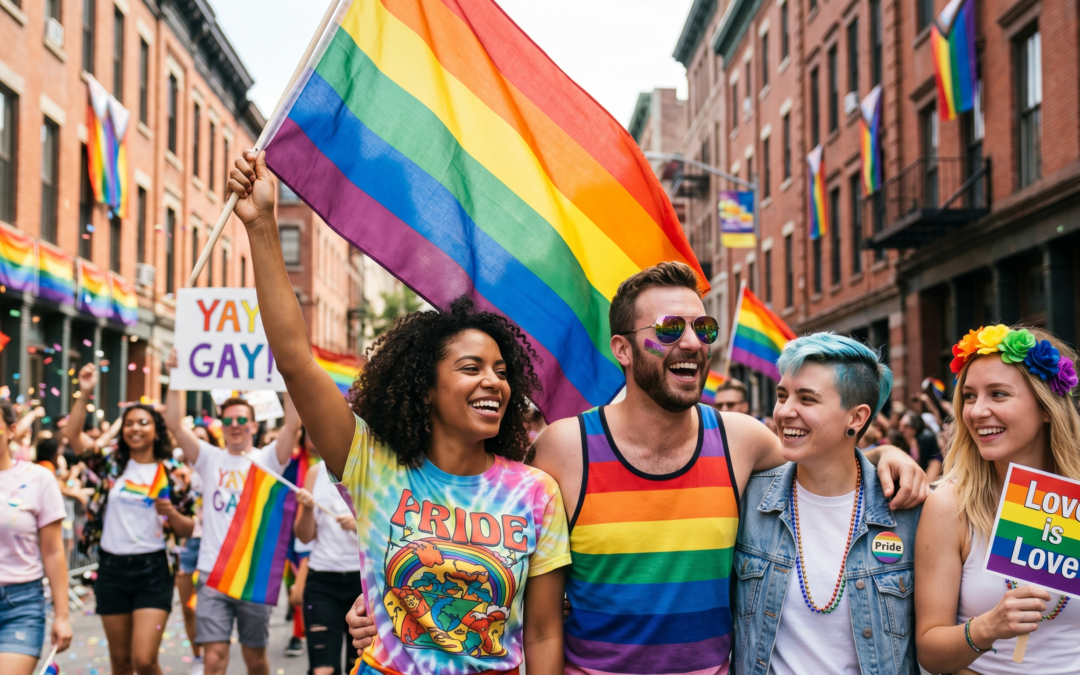
Pride’s origins trace back to a boiling point decades ago. On June 28, 1969, police raided the Stonewall Inn, a gay bar in New York City’s Greenwich Village — something that happened regularly and with little consequence, because LGBTQIA+ people had almost no legal protections and were routinely harassed. But that night, the community fought back. The riots that followed over several days became a catalyst for the modern LGBTQIA+ rights movement. A year later, in 1970, the first Pride marches were held in New York, Los Angeles, San Francisco, and Chicago to commemorate Stonewall. What started as an act of protest and survival has grown into a global celebration — but it’s worth remembering that the party has always had a deeper purpose: visibility, safety, and the radical idea that LGBTQIA+ people deserve to exist freely and openly. In fact, dance has been used throughout human history as a connective, community healing ritual and it’s probably not a coincidence that it has always been a huge part of pride celebrations. Dan Savage, a queer activist, once said “During the darkest days of the AIDS crisis, we buried our friends in the morning, we protested in the afternoon, and we danced all night. The dance kept us in the fight because it was the dance we were fighting for. It didn’t look like we were going to win then and we did. It doesn’t feel like we’re going to win now but we could. Keep fighting, keep dancing.” It says so much about resilience — that even in the middle of unimaginable grief and struggle, protecting your joy is its own form of resistance.
When it comes to mental health, the data is clear. LGBTQIA+ people experience significantly higher rates of depression, anxiety, and suicidal ideation than their straight, cisgender peers — and this isn’t because of who they are, it is because of what they face. Stigma, discrimination, family rejection, and the exhausting experience of navigating a world that wasn’t designed with you in mind all take a real toll. There’s a framework for understanding this called minority stress theory, which describes how the chronic stress of belonging to a marginalized group compounds over time and affects mental and physical health. Young LGBTQIA+ people are especially vulnerable — those who lack family support are significantly more likely to struggle. The good news is that connection and acceptance are genuinely protective. Supportive relationships, affirming communities, and access to LGBTQIA+-competent mental health care can make an enormous difference. Pride, in that sense, isn’t just a celebration — it’s also a lifeline.
If you’re thinking about starting therapy for something adjacent to these topics, you might have concerns about how to choose a clinician or hesitation about how to know if a therapist is a safe place to process these things. It would be quite common to interview a therapist a little bit, and they would likely appreciate it as well, to see if the match is a good one.
Questions to ask a potential therapist that can help determine if they’re a good fit for these types of situations and issues (even the act of asking them can be a good litmus test in and of itself to see how they respond the topic overall aside from their specific answers):
About Their Experience & Training
- “Have you worked with LGBTQIA+ clients before, and how much of your practice includes this population?”
- “Have you received any specific training around LGBTQIA+ issues, minority stress, or gender identity?”
- “Are you familiar with the WPATH standards of care?” (especially relevant if trans healthcare is part of the picture)
About Their Approach & Beliefs
- “Do you see LGBTQIA+ identities as normal variations of human experience?” (a good therapist won’t hesitate on this one)
- “What’s your approach if my identity or relationships come up in our work together?”
- “Are you affirming of all identities across the spectrum — including nonbinary, bisexual, and queer identities?” (some therapists are fine with gay/lesbian clients but less informed about other identities)
About Practical Comfort
- “Are you comfortable using my preferred name and pronouns consistently?”
- “Have you worked with clients navigating family rejection or coming out?”
- “Do you have experience with the specific issues I’m dealing with?” (whether that’s internalized shame, relationship dynamics, trauma, etc.)
A Good General Gut-Check Question
- “What does affirming care mean to you?” — This open-ended question can reveal a lot about how thoughtfully someone has engaged with the topic.
The bottom line is that you’re essentially interviewing them, and any therapist worth their salt will respect that. If someone seems annoyed by these questions or gives vague, uncomfortable answers, that’s really useful information. Trust your gut — the therapeutic relationship only works when you feel genuinely safe.
RESOURCES
New Mexico
- Equality New Mexico (eqnm.org) — While primarily an advocacy organization, they’re a solid starting point for finding affirming local resources and community connections in NM.
- Transgender Resource Center (https://tgrcnm.org/)- Provides advocacy and support services, snacks, a place to rest and talk, clothing, binders, support groups, information etc.
- The University of New Mexico LGBTQ Resource Center — Offers support, community, and can connect students (and sometimes the broader community) with affirming counseling services.
- La Familia Medical Center (Santa Fe & Albuquerque) — A community health center known for being LGBTQIA+-affirming, offering both physical and behavioral health services on a sliding scale.
- NM Crisis Line — Call or text 988 (the National Suicide & Crisis Lifeline), but New Mexico has local crisis counselors connected through this line who are trained to work with diverse populations.
National
- The Trevor Project (thetrevorproject.org) — Focused specifically on LGBTQIA+ youth, offering a 24/7 crisis line (1-866-488-7386), text (“START” to 678-678), and chat support.
- Trans Lifeline (translifeline.org) — A peer support crisis hotline run by and for trans people. U.S. number: 877-565-8860.
- SAGE Hotline — Specifically for LGBTQIA+ older adults, reachable at 1-877-360-5428.
- NAMI (National Alliance on Mental Illness) (nami.org) — Has an LGBTQIA+ resource section and a helpline at 1-800-950-6264.
- The LGBT National Help Center (lgbthotline.org) — Offers free, confidential peer support via phone and chat for all ages.
CONTACT US TODAY!
505-242-6988

The Evolution Group Incorporated is a private counseling firm that has built its practice around the core values of integrity, authenticity, safety and honoring individuality. We work with individuals, couples and families to empower the wholeness that already lies within them
The Evolution Group, Inc.
218 Broadway Blvd SE
Albuquerque, NM 87102
Front Desk Hours:
Monday to Thursday: 9:00am-6:00pm
Friday: 9:00am-5:00pm
Appointment Required
Phone: 505-242-6988
Email: [email protected]


