


Becoming a Mom of Two: The Little Songs That Help Build Big Feelings
Practicing Emotional Regulation as a Therapist and Mom
A few months ago, our family grew from three to four. As a therapist, I spend my days talking about emotional regulation, attachment, and helping people understand their nervous systems. Then I come home to a newborn who communicates entirely through cries and an almost two-year-old who is discovering that having big opinions and even bigger emotions is part of growing up. Motherhood has a funny way of taking everything you’ve learned professionally and asking you to practice it in real time.
Some days, I’m feeding a newborn while my toddler is crying because I peeled the banana “wrong.” Other days, my toddler just needs reassurance that even though there’s a new baby in the house, there’s still enough love, attention, and connection for both of them. I’ve been reminded that toddlers aren’t trying to give us a hard time – they’re having a hard time. Their brains are still learning how to understand frustration, disappointment, excitement, and sadness. They borrow our calm because they don’t yet have enough of their own.
Understanding Toddler Meltdowns & Secure Attachment
It’s not about stopping the tantrum.
It’s about helping our children eventually learn, “I know what I’m feeling. Someone understands me. I can get through this.” That’s the foundation of secure attachment. As a therapist, I know the research. As a mom, I’m living it. The more I parent, the more I realize that emotional regulation isn’t about raising children who never have meltdowns. It’s about raising children who know someone will stay with them through the meltdown. Sometimes that looks like sitting on the floor beside a crying toddler. Sometimes it looks like rocking a newborn while humming the same song for the hundredth time. Sometimes it looks like taking a deep breath yourself before responding. These moments may seem ordinary, but they’re doing extraordinary work.
They’re teaching safety.
They’re building trust.
They’re wiring little nervous systems to believe, “When life feels overwhelming, I don’t have to face it alone.”
How Simple Songs Build Emotional Intelligence in Children
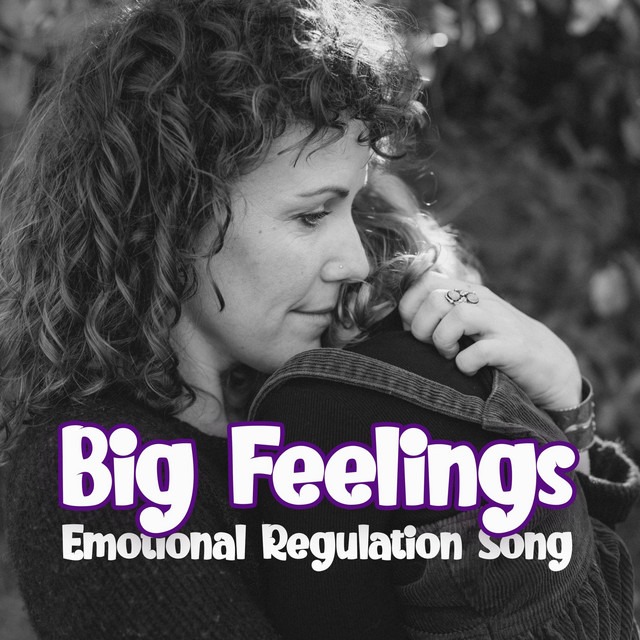
Lately, we’ve been listening to Big Feelings by Tawnee Kendall, and it’s quickly become one of my favorite songs to start singing while my toddler is having big feelings and to help me remember the simple steps that I teach daily to my clients around how to help comfort someone when they are feeling big emotions. The more I listened, memorizing the lyrics, and using this little song the more I realized something important.
These little songs are actually teaching emotional intelligence.
They give children words for feelings before they have the vocabulary to explain them. They normalize that emotions are okay to have. They remind kids that feelings come and go, and that they don’t have to face those feelings alone.
As adults, we often think emotional regulation is something we teach through conversations. But children learn so much through repetition, rhythm, play, and connection. Singing together during calm moments creates pathways that are easier to access during hard moments.
The Lasting Power of Co-Regulation in Parenting
So if you’re in the thick of parenting young children, know this: the songs you sing, the books you read, the hugs you offer, and the calm you model matter more than you probably realize.
Our children may not remember every lyric. But they’ll remember how it felt to be comforted. And that feeling may become one of the greatest gifts we ever give them.
Compassionate Family Support at The Evolution Group

The Evolution Group Incorporated is a private counseling firm that has built its practice around the core values of integrity, authenticity, safety and honoring individuality. We work with individuals, couples and families to empower the wholeness that already lies within them
The Evolution Group, Inc.
218 Broadway Blvd SE
Albuquerque, NM 87102
Front Desk Hours:
Monday to Thursday: 9:00am-6:00pm
Friday: 9:00am-5:00pm
Appointment Required
Phone: 505-242-6988
Email: [email protected]


